The Capitoline Museums at a glance
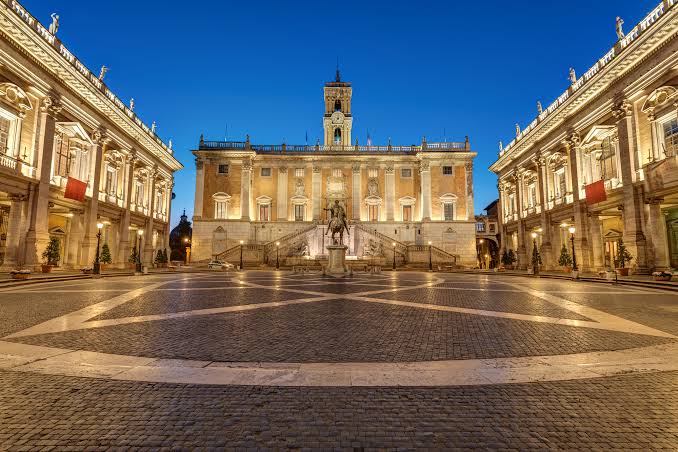
The Capitoline Museums occupy two palaces facing each other across the square Michelangelo designed on the Capitoline Hill: the Palazzo dei Conservatori and the Palazzo Nuovo, linked by an underground gallery that runs beneath the piazza. The collection dates back to 1471, when Pope Sixtus IV gave the great Lateran bronzes — the Wolf among them — to the people of Rome, and it has been open to the public since 1734.
| Fact | Details |
|---|---|
| Price from | €15 full / €9.50 reduced; €20.50 / €15 when exhibitions are running (source: museicapitolini.org) |
| Hours | Daily 9:30am–7:30pm, last entry 6:30pm · full opening hours |
| Booking | Not compulsory but recommended: pick a time slot and skip the ticket-office queue |
| Suggested duration | 2–3 hours; up to 4 with the Pinacoteca and the Villa Caffarelli exhibitions |
| Address | Piazza del Campidoglio 1, 00186 Rome — a 5-minute walk from Piazza Venezia |
| Closed | 1 May and 25 December (24 and 31 December mornings only) |
Don't mix them up with the Vatican Museums: they're different museums, on opposite sides of the city centre. If you want to see both and save money, there's a Capitoline + Vatican combined ticket.
Capitoline Museums tickets: which one to choose
Standard ticket
from €15 reduced €9.50
Entry to both palaces, the Galleria Lapidaria, the Tabularium and the Pinacoteca. At the ticket office you pay the base rate but risk the queue: online you choose a date and time.
Best for low-season weekday visits.
Reserved entry online
from €18 approx., with booking
Dedicated time slot, entry without stopping at the ticket desk and free cancellation up to the day before on most rates.
Guided tour / combo
from €35 approx., 2 hours
A flesh-and-blood guide in front of the Wolf and the Marcus Aurelius transforms the visit. Alternatively: the official video guide costs €6.
Ideal for a first trip to Rome or if you're travelling with someone who gets bored in museums.
The full rate-by-rate comparison, including reductions and free entry, is on the tickets and prices page.
Book reserved entry
Pick your date and time, instant confirmation on your phone, flexible cancellation.
What your ticket gets you
Palazzo dei Conservatori
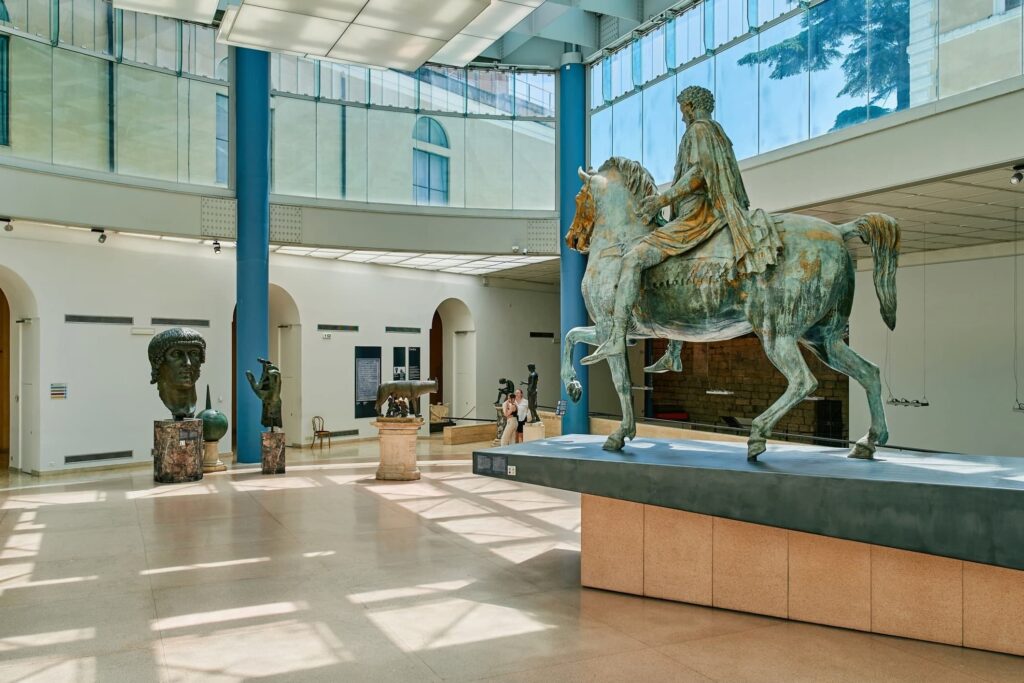
This is the main entrance. In the courtyard you're greeted by the fragments of the colossus of Constantine — the head alone is 1.8 metres tall. On the upper floors: the Capitoline Wolf, the Spinario (Boy with Thorn), the Capitoline Brutus and the glass-walled Exedra sheltering the original equestrian statue of Marcus Aurelius, the only large Roman equestrian bronze to survive. On the top floor, the Pinacoteca holds two Caravaggios (The Fortune Teller and Saint John the Baptist), plus Rubens and Guercino.
Palazzo Nuovo and the Tabularium
Below the piazza, the Galleria Lapidaria leads to the Tabularium, the state archive of Republican Rome: its arcades frame the most underrated view over the Roman Forum, included in your ticket. You then climb up into the Palazzo Nuovo: the Dying Gaul, the Capitoline Venus, and the Hall of the Emperors with its 67 portrait busts.
Villa Caffarelli and the 2026 exhibitions
The Villa Caffarelli wing hosts the big temporary exhibitions: in 2026 that means "Vasari and Rome" (until 19 July) and "Diego Rivera" (9 June – 13 December). In the garden stands the 13-metre reconstruction of the colossus of Constantine. Fans of industrial archaeology can carry on to the Centrale Montemartini, the museum's second venue on Via Ostiense: Roman statues among turbines and diesel engines.
When to go (and when not to)
The Capitoline Museums never see Vatican-scale crowds: even in high season the visit stays manageable. Queues, when they happen, form at the ticket office, not at the entrance — one more reason to arrive with your ticket already in your pocket.
- Best times: opening at 9:30am on weekdays, or after 4:30pm — with last entry at 6:30pm you still get 3 hours.
- Avoid: Saturdays and Sundays between 11am and 3pm, and rainy days (the museum soaks up crowds fleeing the open-air sites).
- For photos: Piazza del Campidoglio is at its best at sunset and after dark, when the palaces are floodlit; shoot before or after your visit.
How to get there
The entrance is at Piazza del Campidoglio 1: you climb up from Piazza d'Aracoeli via Michelangelo's cordonata ramp. From Piazza Venezia it's a 5-minute walk.
- Bus: dozens of routes stop at Piazza Venezia (including 40, 64, 63, 81, 87, 119, 170); tram 8 terminates right there.
- Metro: the nearest station is Colosseo (line B), a 15-minute walk along Via dei Fori Imperiali.
- On foot: Pantheon 12 minutes, Colosseum 15, Trevi Fountain 15.
There are lifts and accessible routes; the step-free access is signposted from Piazza d'Aracoeli. Details on parking and entrances are on the opening hours and access page.
All the guides on this site
Frequently asked questions
How much do Capitoline Museums tickets cost?
The full-price ticket starts at €15 (reduced €9.50) when no exhibitions are on; during exhibition periods the combined rate is €20.50 (reduced €15). Online there's a booking fee of about €1. Figures from the official site museicapitolini.org, verified July 2026.
Is it worth booking Capitoline Museums tickets online?
Yes, especially at weekends and during exhibitions: you reserve a time slot, avoid the ticket-office queue, and many rates include free cancellation. On low-season weekdays you can also just buy at the desk.
How long does a visit to the Capitoline Museums take?
The essential route (Conservatori, Tabularium, Palazzo Nuovo) takes 2–3 hours. Add an hour for the Pinacoteca and another for the Villa Caffarelli exhibitions.
Are the Capitoline Museums and the Vatican Museums the same thing?
No. The Capitoline Museums are Rome's civic museums on the Capitoline Hill; the Vatican Museums belong to Vatican City State and include the Sistine Chapel. There's a combined ticket for visiting both.
What shouldn't I miss at the Capitoline Museums?
The Capitoline Wolf, the original equestrian statue of Marcus Aurelius, the Dying Gaul, the Capitoline Venus, the fragments of the colossus of Constantine and the view over the Roman Forum from the Tabularium. In the Pinacoteca, two paintings by Caravaggio.
Are the Capitoline Museums free on the first Sunday of the month?
Free entry to Rome's civic museums mainly applies to residents of Rome and its Metropolitan City (free with ID) and MIC card holders. Free-entry schemes for all visitors vary: check the official page before counting on getting in for nothing.
Can I take photos inside?
Yes, for personal use and without flash. Tripods and selfie sticks are not allowed in the galleries.